this article outlines a real-life practical path for a holiday promotion, from traffic prediction, node selection, intelligent scheduling to automatic expansion and cleaning switching, focusing on how to deploy a solution with us qualcomm links and high-defense servers as the core in the united states to ensure business availability and cost control.
how much traffic peak value needs to be estimated in advance, and how to do it more accurately?
before e-commerce promotions , accurately estimating traffic peaks is the starting point for all scheduling and capacity expansion work. we use historical data from the same period as a baseline, combined with event exposure plans, delivery scale, third-party advertising and social media drive coefficients, to establish multi-model superimposed predictions (basic trend + external coefficients + real-time correction). at the same time, the estimate is split by state in the united states, and combined with the cdn hit rate and static resource ratio, the hierarchical peak and burst fluctuation ranges are obtained, which provides a quantitative basis for the next step of capacity reservation and routing strategies.
which network and server architecture is suitable for deployment in the united states to ensure high defense capabilities?
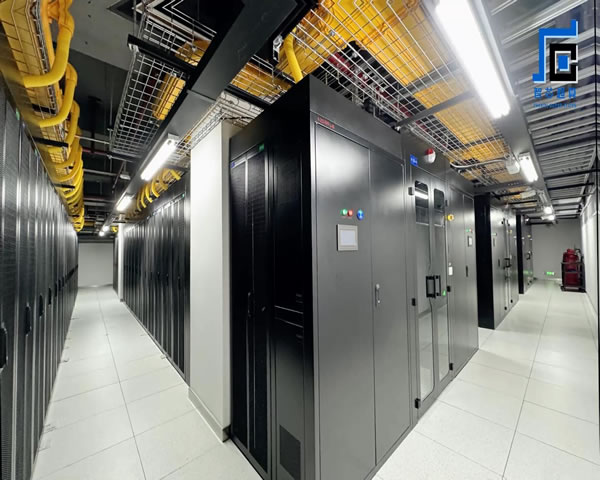
when deploying in the united states, we give priority to a hybrid architecture with high-defense servers as the core and multi-outlet ddos cleaning. multiple cdn and anycast outlets are used at the edge, and important services are placed in computer rooms equipped with hardware protection and large bandwidth cleaning pools; the application layer is split into microservices, and the database and cache are read and written separated and replicated across availability zones. this architecture can maintain low latency while leveraging the joint cleaning capabilities of operators and cloud vendors to quickly suppress network layer attacks and avoid "a single failure leading to complete paralysis."
how to schedule traffic and automatically expand capacity to cope with emergencies?
the core strategy is to automate traffic scheduling and capacity expansion . we set hierarchical alarm and trigger strategies based on monitoring indicators such as prometheus/influx (qps, response delay, packet loss rate, number of connections, cpu/memory usage). after triggering, call the elastic scaling group of the cloud or computer room through api, and combine the traffic controller (l4/l7 load balancing) to perform traffic segmentation: give priority to static, low-risk traffic to cdn and static hosting nodes, and keep sensitive transaction traffic in high-defense instances. the expansion strategy includes preheated mirroring, link bandwidth reservation, and reclamation strategies to ensure rapid and economical expansion.
where to deploy the cleaning center and when does it need to switch cleaning traffic?
the cleaning center should be deployed at a node with diverse network exits and close to the traffic source. we chose one on each coast in the united states and connected it to the operator's large bandwidth cleaning pool. the switching timing is triggered by two types: first, the traffic at the network layer exceeds normal multiples and the bandwidth increases abnormally; second, a large number of abnormal requests appear at the business layer and the error rate rises sharply. the switching process uses dns+bgp collaboration: bgp priority adjustment directs malicious traffic to the cleaning center, and legitimate traffic quickly flows back through black and white lists and behavioral identification. the entire process must be completed within minutes and ensure session continuity and transaction consistency.
why adopt a hybrid multi-cloud and local high-defense strategy?
a single platform can easily become a bottleneck in the event of extreme attacks or operator failures. a hybrid strategy of multi-cloud and local high-defense can complement each other: cloud vendors provide elastic expansion and global node coverage, and local or cooperative computer rooms provide customized hardware protection and lower long-term bandwidth costs. this model can not only improve the anti-attack capability (different cleaning paths and strategies), but also achieve a trade-off in terms of cost: enable cloud elasticity during promotional peaks, and fall back to local hosting during flat peaks, thus ensuring availability while controlling tco.
how to conduct drills and rollbacks to ensure that the solution is implementable and recoverable?
pre-drilling is key: we regularly drill bgp switching, traffic diversion, link expansion, and grayscale rollback. the drills are conducted in stages: offline drills to verify scripts and automated processes; small-traffic online drills to verify links and session recovery; large-traffic full-link drills to simulate real attacks and expansion responses. the rollback strategy includes automatic downgrade (traffic reflow + instance cancellation), data consistency verification and transaction compensation mechanism. after each drill, sla deviations and failure points are recorded and an improvement list is formed to ensure a more robust next time.
which monitoring and alarm indicators are the most critical, and how to avoid false triggers?
key indicators include: ingress bandwidth, syn/udp exception ratio, business qps, 95/99th percentile response delay, error code distribution and transaction success rate. in order to avoid false triggers, we adopt multi-dimensional rules (for example, bandwidth abnormality + abnormal connection number + error rate must be met at the same time) and set up a cooling window and confirmation mechanism. we also introduce short-term and long-term baseline comparisons to reduce misjudgments caused by short-term peaks or probe traffic. in addition, manual attendance combined with automated confirmation can reduce erroneous decisions at critical moments.
where can cost and response speed be further optimized, and what are the improvements in the future?
follow-up optimization directions include: more refined traffic tiered billing and on-demand retention strategies, traffic anomaly prediction and intelligent pre-scaling based on machine learning, edge computing to improve transaction confirmation rates, and the establishment of mutual backup agreements with multiple cleaning service providers to reduce the risk of interruption. these improvements can reduce peak costs during promotions and further shorten failure recovery times without sacrificing security.
- Latest articles
- Comprehensive Analysis Of Reliability And Hidden Costs Of Hong Kong Vps 10 Yuan Ultra-low Price Package
- Combine CDN And Load Balancing To Choose Which Singapore Server Is Better To Use To Achieve High Availability Architecture
- Operation And Maintenance Practice Of Three Networks Cn2 Malaysia Link Fault Rapid Location And Recovery Method
- Japanese Station Group Server Recommendations Focus On Delay Stability Node Selection Suggestions
- How To Operate The Korean Purchasing Agent Group’s Operation Process, From Group Regulation To Transaction Closed-loop Optimization
- How To Purchase Taiwanese Native IP Phone Cards In Bulk And Manage Inventory With An Enterprise-level Solution
- How To Get Free Unlimited Traffic Hong Kong Cn2 Real Use Experience Report
- Recommended Network Diagnostic Tools To Help You Locate The Root Cause Of Problems On The World Of Warcraft Taiwan Server
- Methods To Improve Access Speed By Combining Taiwan’s Website Cluster Cloud Hosts With Global CDN
- Alibaba Cloud Korea Lightweight Servers Are Very Cheap—real-life Case Sharing Of Low-cost Deployment
- Popular tags
-
In-depth Analysis Of Market Conditions And Price Trends Of High-defense Us Server Rentals
this article provides an in-depth analysis of the market conditions and price trends of high-defense us server rentals, covering vps, hosting, domain names, cdn and ddos protection technologies, giving purchase suggestions and recommending dexun telecommunications. -

Advantages, Disadvantages And Recommended Service Providers Of Infinite Cloud Us Server Rental
this article will introduce in detail the advantages and disadvantages of infinite cloud us server rental, and recommend suitable service providers to help users choose the appropriate server solution. -

Analysis Of The Process And Precautions For Renting American High Defense Servers
this article analyzes the rental process and precautions of the us high defense server, and helps you choose the most suitable high defense server.